
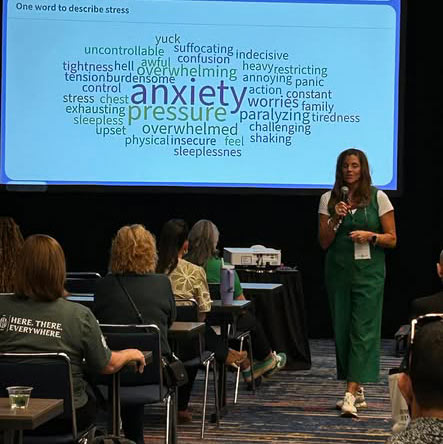
Stress is an inevitable part of the human experience. Nearly everyone can relate to the feeling of being “stressed out,” and we talk about it constantly. We say we’re stressed about work, money, relationships, health, or simply not having enough time. It’s such a common word that it almost feels self-explanatory. Yet if someone were to stop us and ask, “What exactly is stress?” many of us would struggle to give a clear answer. We know what stress feels like, and we know what causes it, but defining it becomes difficult. This lack of clarity becomes problematic when we attempt to manage stress without fully understanding it. Let’s take a closer look.
The origins of stress were not rooted in psychology or mental health. In fact, the word stress was a mechanical term that described the amount of pressure placed on an object. Over time, researchers began using the term to describe pressure placed on people. One of the first scientists to do this was Hans Selye, a researcher whose work helped bring stress into mainstream conversations about health.
Selye described stress as the body’s automatic biological response to any demand placed on it. According to him, it didn’t matter whether that demand was good or bad—the body reacted in the same basic way. When we are faced with a stressor, our heart rate increases, stress hormones are released, and our body prepares to act.
While Selye’s work helped people take stress seriously, it also painted stress in a dangerous light. According to his theory, if stress didn’t go away, it could eventually make us sick. Although this view raised important awareness, it didn’t fully explain why people experience stress so differently.
There was a missing piece. If stress worked the same way for everyone, why do people react so differently to the same situations?
That question led psychologists to take a closer look at how our minds influence stress. Richard Lazarus, a psychologist, noticed that stress isn’t just about what happens to us—it’s about how we interpret what happens. Two people can face the same situation, yet one feels overwhelmed while the other feels calm or even motivated.
Think about it this way: imagine encountering a large dog while out for a walk. One person might immediately panic, while another thinks the dog looks friendly. The situation is the same, but the stress response is completely different. This is because stress is personal.
Lazarus and his colleague Susan Folkman described stress as an interaction between a person and their environment that feels important and difficult to handle. In other words, stress happens when we believe a situation matters to us and that we may not have the resources to cope with it. This understanding shifts stress from something that simply happens to us to something shaped by our thoughts, experiences, and beliefs.
This process starts with how we mentally evaluate a situation. Sometimes we decide something doesn’t affect us, and no stress response occurs. Other times, we see a situation as a threat or something that could harm us. But we can also see stressors as challenges—difficult situations that may help us grow or learn. How we frame a situation plays a major role in how stressful it feels.
At the same time, we’re also judging whether we have what it takes to handle the situation. Do we have enough time? Support? Skills? Energy? These quick evaluations happen almost automatically, but they strongly influence how intense our stress feels.
Once we decide something is stressful, we cope. Coping looks different for everyone. Some people avoid stressors, at least temporarily. Others try to solve the problem directly by planning or taking action. Many people lean on friends, family, or coworkers for support—and research shows that feeling supported can significantly reduce stress. No single coping strategy works all the time, and some can actually increase stress if they’re overused or don’t fit the situation.
The encouraging part of this understanding is that it gives us more control than we might expect. While we can’t eliminate stress from our lives, we can change how we respond to it. By becoming more aware of how we interpret situations and how we cope, we can start to build a healthier relationship with stress.
Stress isn’t just something to get rid of. It’s a signal—one that tells us something important is happening. When we understand how stress works, we can stop seeing it as the enemy and start using it as information, guidance, and sometimes even a catalyst for growth.
In the next post, we’ll take a deeper dive into the question that often gets overlooked: What is really stressing us out—and why? Because before we can change our relationship with stress, we need to understand what’s causing it.
– Jennifer